Reasoning on Graphs: How Knowledge Graphs Make AI Assistants More Accurate
Reasoning on Graphs: How Knowledge Graphs Make AI Assistants More Accurate
AI assistants can be brilliant—and confidently wrong. For businesses, that gap between fluent text and faithful facts determines whether you appear in answers users trust. A new research line shows a practical path to close that gap: grounding large language models (LLMs) in knowledge graphs (KGs) so their reasoning is faithful, interpretable, and reliable.
One of the clearest frameworks is “Reasoning on Graphs” (RoG), which demonstrates how KGs can guide LLMs to reason over real, verifiable relationships rather than hallucinating missing links.
Why this matters for AI visibility (beyond SEO)
Generative engines (ChatGPT, Google’s SGE, Bing Copilot, Perplexity) synthesize answers directly, often without sending traffic to source sites. The winners in this new paradigm are the sources these systems can trust and reason over. KGs provide:
- Faithful reasoning: Constrains answers to facts that exist in the graph
- Multi‑hop discovery: Enables complex queries like “cardiology clinics in Seattle that accept Blue Cross”
- Interpretability: Yields explicit reasoning paths that can be inspected and explained
For businesses, that means: if you are modeled in public KGs (e.g., Wikidata) with the right relationships, you’re dramatically more discoverable by AI systems that need verifiable, traversable facts—not just keywords.
What RoG introduces (in plain English)
RoG structures the LLM workflow into three stages:
-
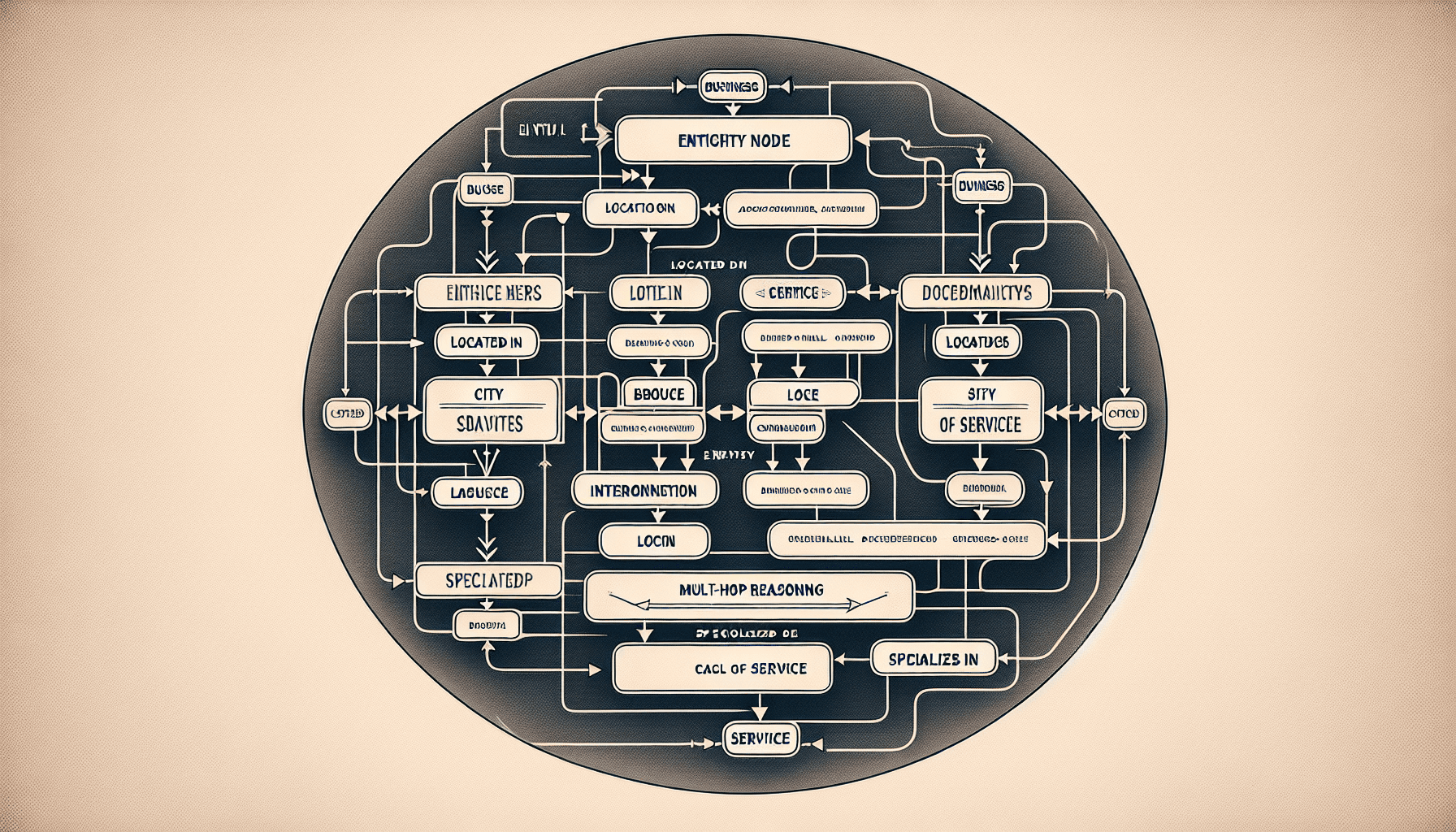
Planning (Path Planning) The LLM proposes a relation path schema (a plan) that could answer the question using graph relations (e.g., Business → Located in → City → Accepts → Insurance).
-
Retrieval (Validate with the Graph) The system retrieves valid entities and edges from the KG that match this plan—filtering out non‑existent or invalid hops so hallucinations are curtailed.
-
Reasoning (Constrained Generation) The LLM generates the final answer while being grounded in the retrieved, valid paths—producing faithful, interpretable outputs.
This planning‑retrieval‑reasoning pipeline lets LLMs “think with the graph,” not around it.
Key results (and why they’re credible)
Research on RoG reports:
- Higher faithfulness: Answers adhere to facts present in the KG
- Better interpretability: Reasoning paths can be inspected and audited
- State‑of‑the‑art performance on KG reasoning benchmarks, especially for multi‑hop queries where naïve LLMs tend to hallucinate
In short, RoG shows that LLMs become more useful when they’re paired with structured, verifiable knowledge.
Practical playbook: Make your business traversable
To benefit from KG‑grounded reasoning in real AI systems:
-
Publish to trusted KGs Create or enhance your entity pages in Wikidata (and other public KGs). At minimum include: entity type, official name, website, locations, services/specialties, languages, insurance/networks (for healthcare), practice areas (for legal), neighborhoods/markets (for real estate).
-
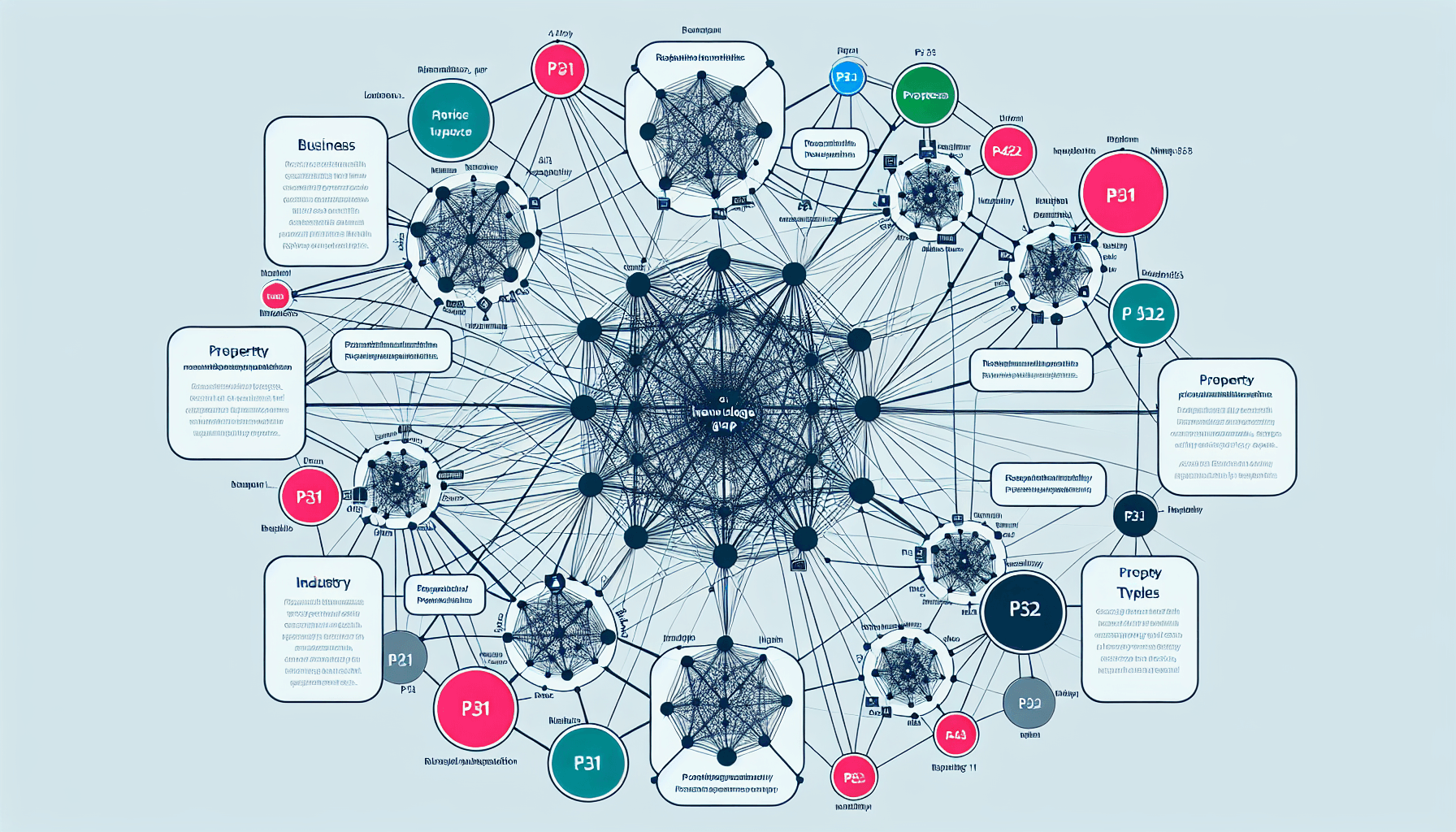
Model the relationships, not just the facts Connect your entity to hubs users (and AIs) traverse: city, region, industry, service types, accepted insurance, languages, hours, accreditation, affiliations.
-
Mirror structure on your website (Schema.org) Use Schema.org to reflect the same relationships on‑site. Consistency across KGs and Schema.org improves trust and matching.
-
Strengthen evidence in content GEO findings show that adding statistics, quotations from authorities, and clean citations increases inclusion in AI answers. Pair that with strong KG structure for maximum effect.
-
Maintain freshness Keep properties current (hours, coverage areas, accepted insurance, market focus). Out‑of‑date graph facts reduce discoverability and trust.
Use‑case snapshots
-
Healthcare: “Cardiology clinics in Seattle that accept Blue Cross and offer weekend hours” Traversal: Clinic → Specialty → Location → Insurance → Opening hours
-
Legal: “Spanish‑speaking family law attorneys near Phoenix who offer free consultations” Traversal: Firm/Attorney → Practice area → Languages → Location → Consultation policy
-
Real estate: “Agents specializing in downtown condos with 10+ years experience” Traversal: Agent → Neighborhood expertise → Property type → Tenure
Each query is multi‑hop. Each hop is a relationship your entity should expose.
What to do next
- Audit your current KG presence (Wikidata first).
- Fill missing properties and add the highest‑impact relationships that enable multi‑hop discovery.
- Align on‑site Schema.org with the same structure.
- Enrich on‑site content with statistics, quotations, and verifiable references.
- Monitor how AI assistants answer your target queries—and iterate.
References
- Reasoning on Graphs (RoG): Faithful and Interpretable Large Language Model Reasoning. (2023). arXiv:2310.01061. https://arxiv.org/abs/2310.01061
- Graph‑constrained Reasoning (GCR): Faithful Reasoning on Knowledge Graphs with Large Language Models. (2024). arXiv:2410.13080. https://arxiv.org/abs/2410.13080
- Paths‑over‑Graph (PoG): Knowledge Graph Empowered Large Language Model Reasoning. (2024). arXiv:2410.14211. https://arxiv.org/abs/2410.14211
Explore Related Topics
Learn More About GEO
Related GEO Articles
Explore our comprehensive coverage of Generative Engine Optimization:
Related Articles
Why Wikidata Is a Premier Knowledge Graph for AI Visibility and GEO (2026 Catalog)
A practical catalog of Wikidata's role as premier public knowledge graph infrastructure for LLMs, SEO agencies, and generative engine optimization workflows.
Wikidata + SPARQL + LLM Prompting: A Practical GEO Playbook for Entity Visibility (2026)
A practical, research-backed guide to generative engine optimization using Wikidata, SPARQL, and LLM prompting. Learn how SEO agencies can improve AI visibility with measurable entity-level workflows.
Generative Engine Optimization (GEO) & Knowledge Graph SEO: What SPARQL Data Shows for US Local Businesses (2026)
GEO analysis software and knowledge graph SEO explained with live Wikidata SPARQL counts—law firms, medical clinics, real estate, and hospitals. For teams comparing GEO platforms and LLM knowledge graph coverage.
Do Wikidata Entities Help Real Estate Agencies Show Up in ChatGPT? A 2026 Real Estate AI Visibility Experiment
We tested US real estate agencies with and without Wikidata entities across matched local markets. The average result was only slightly positive, while the lone rich-entity follow-up was encouraging but too small to generalize.
Do Wikidata Entities Help Clinics Show Up in ChatGPT? Our 2026 Experiment Found the Strongest Gains in Rich Existing Entities
We tested 30 clinics to see whether existing Wikidata entities improve LLM visibility. The broad average lift was small, but rich clinic entities showed a much stronger local discovery signal.
The Research Behind Wikidata and AI Visibility (No Vendors, Just Proof)
Non-vendor evidence that Wikidata feeds AI visibility—and why knowledge graph publishing and Wikidata publishing belong in your agency stack. Research-backed case for agencies.