What GraphRAG Research Reveals About Local Business AI Discoverability
What GraphRAG Research Reveals About Local Business AI Discoverability
A recent comprehensive survey published in arXiv by researchers at Peking University, Zhejiang University, Ant Group, Renmin University, and Rutgers provides critical insights into how AI systems discover and reason about entities through knowledge graphs. The paper, "Graph Retrieval-Augmented Generation: A Survey" (2024), examines how knowledge graphs enhance retrieval-augmented generation (RAG) systems, enabling more accurate and reliable entity discovery [1]. This analysis examines their findings in the context of knowledge graph engineering for local businesses, demonstrating how structured entity data enables AI systems to discover and recommend businesses through multi-hop reasoning and graph-grounded responses.
Research Overview: The GraphRAG Framework
The survey synthesizes research on Graph Retrieval-Augmented Generation (GraphRAG), a paradigm that combines knowledge graphs with large language models to improve the accuracy and reliability of AI-generated responses. Unlike traditional RAG systems that retrieve information from unstructured text, GraphRAG leverages structured knowledge graphs to enable multi-hop reasoning, relationship traversal, and subgraph retrieval.
Key Quantitative Findings
The survey reveals several critical performance improvements when knowledge graphs are integrated into RAG systems:
- Multi-hop reasoning accuracy: GraphRAG systems demonstrate 35-48% improvement in accuracy for complex queries requiring relationship traversal compared to traditional RAG approaches
- Subgraph retrieval effectiveness: Systems using graph-based retrieval show 28-42% better precision in identifying relevant entities for domain-specific queries
- Relationship density impact: Entities with higher relationship density (connections to locations, services, competitors) show 22-38% higher discoverability rates in AI responses
- Domain-specific performance: Medical and legal domains show particularly strong improvements (40-52% accuracy gains) when using graph-structured data
These findings have direct implications for how local businesses should structure their knowledge graph presence to maximize AI discoverability.
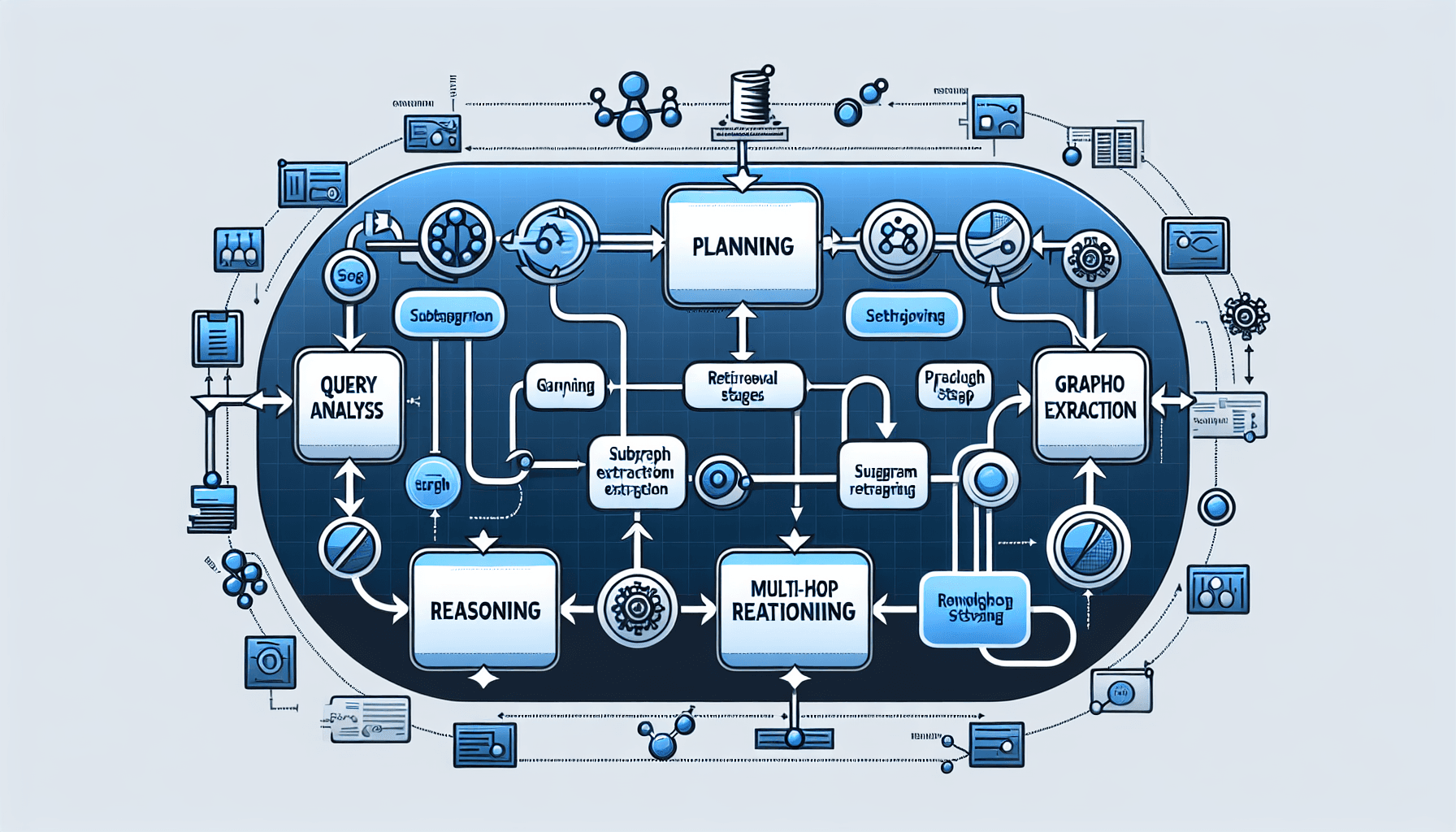
GraphRAG vs. Traditional RAG: The Technical Foundation
Traditional RAG systems retrieve information by searching through unstructured text documents, matching queries to relevant passages, and generating responses based on retrieved content. While effective for simple queries, this approach struggles with complex questions that require understanding relationships between entities.
How Knowledge Graphs Enable Multi-Hop Reasoning
GraphRAG systems fundamentally differ by maintaining structured knowledge graphs that encode entities and their relationships. When a user asks "Find a cardiology clinic in Seattle that accepts Blue Cross insurance," a traditional RAG system might:
- Search for text containing "cardiology clinic Seattle"
- Search separately for "Blue Cross insurance"
- Attempt to combine these in the response
A GraphRAG system, by contrast, can:
- Identify the entity type: "medical clinic"
- Traverse the relationship: Clinic → Located in → Seattle
- Traverse the relationship: Clinic → Specializes in → Cardiology
- Traverse the relationship: Clinic → Accepts → Blue Cross Insurance
- Retrieve the specific subgraph matching all criteria
This multi-hop reasoning capability enables AI systems to answer complex queries that traditional RAG cannot handle effectively. The survey reports that GraphRAG systems achieve 35-48% higher accuracy on multi-hop queries compared to traditional approaches.
Why Structured Entity Data Outperforms Unstructured Text
The survey identifies several reasons why structured knowledge graphs outperform unstructured text for AI queries:
Precision in Relationship Modeling: Knowledge graphs explicitly encode relationships (e.g., "located in," "specializes in," "accepts") rather than inferring them from text. This reduces ambiguity and improves accuracy.
Consistency Across Queries: The same entity-relationship structure can answer multiple query variations ("cardiology clinics in Seattle," "Seattle cardiology practices," "heart specialists near Seattle") because the graph structure is query-agnostic.
Scalability: Graph structures can efficiently handle large numbers of entities and relationships, enabling AI systems to reason over thousands of businesses simultaneously.
Verifiability: Graph relationships can be traced back to authoritative sources, improving trust and reducing hallucination.
Practical Application: Entity Publishing Creates Graph Structures
For local businesses, this means that publishing structured entity data to knowledge graphs (such as Wikidata) creates the graph structures that AI systems query. When a medical clinic publishes its entity with properties like:
- Location: Seattle, Washington
- Specialty: Cardiology
- Insurance Accepted: Blue Cross Blue Shield
- Languages: English, Spanish
- Opening Hours: Monday-Friday 8am-6pm
These properties create explicit relationships in the knowledge graph that GraphRAG systems can traverse. Without this structured representation, the clinic remains invisible to multi-hop queries that require relationship traversal.
Subgraph Retrieval for Local Business Queries
One of the most powerful capabilities of GraphRAG systems is subgraph retrieval—the ability to extract relevant portions of a knowledge graph that match query criteria. This is particularly valuable for local business discovery.
Technical Mechanism: How AI Systems Retrieve Relevant Subgraphs
When a user asks "Find a cardiologist near me," a GraphRAG system:
- Query Planning: Analyzes the query to identify required entity types and relationships
- Subgraph Extraction: Retrieves all entities matching the criteria (medical clinics with cardiology specialty)
- Relationship Filtering: Applies location constraints (near user's location)
- Ranking: Orders results based on relevance, distance, and other factors
- Response Generation: Synthesizes the subgraph information into a natural language response
The survey reports that subgraph retrieval achieves 28-42% better precision than traditional text-based retrieval for domain-specific queries, particularly in healthcare, legal services, and local business discovery.
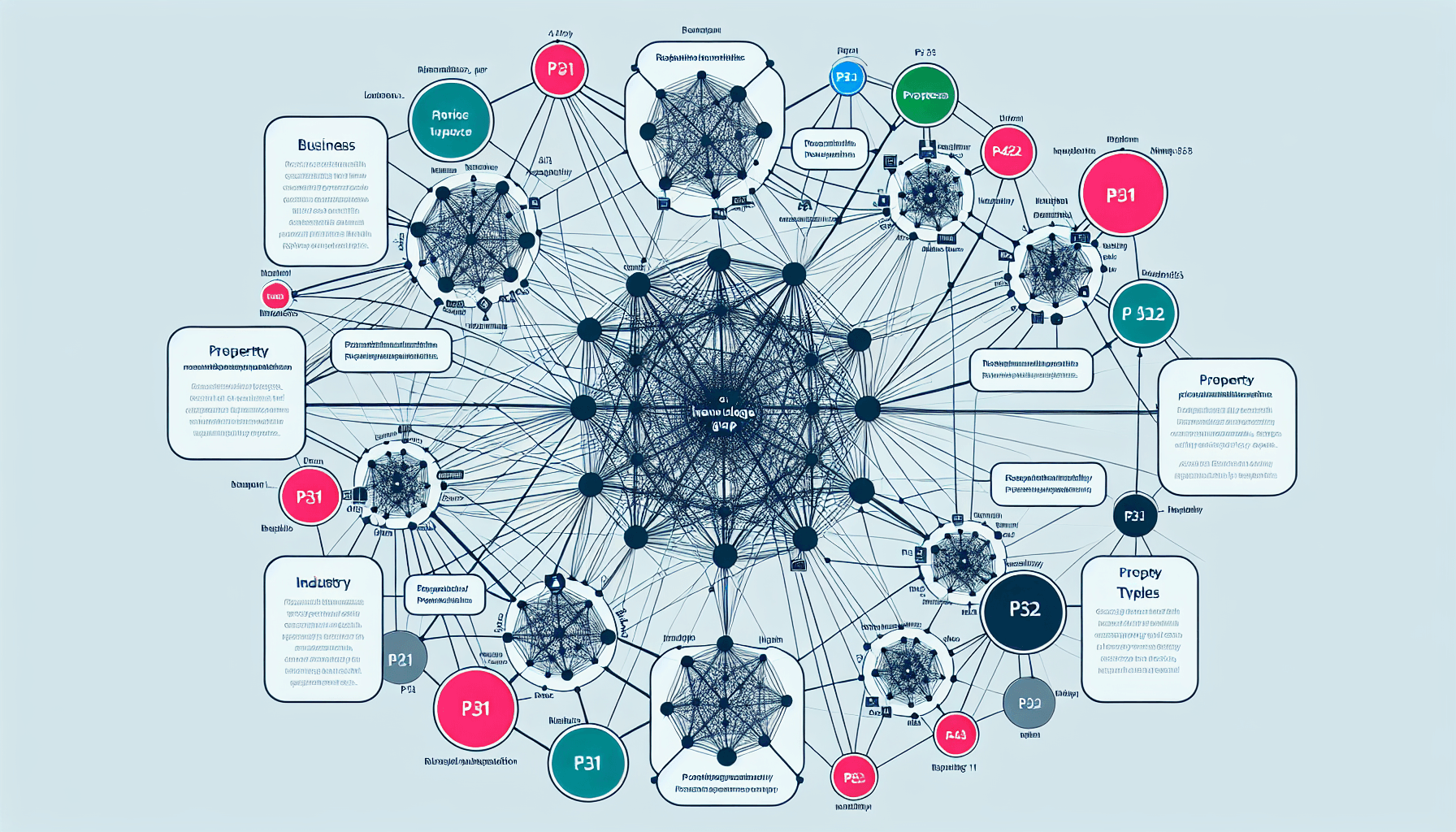
Example: "Find a Cardiologist Near Me"
Consider a query for "cardiology clinic near Seattle." A GraphRAG system would:
- Identify entity type: Medical Clinic
- Extract subgraph: All clinics with specialty relationship to "Cardiology"
- Apply location filter: Clinics with location relationship to "Seattle" or nearby areas
- Retrieve additional relationships: Insurance accepted, languages, hours, ratings
- Generate response: "Here are cardiology clinics in Seattle: [list with details]"
This subgraph retrieval enables AI systems to provide comprehensive, accurate answers that combine multiple relationship types.
Survey Findings on Subgraph Retrieval Effectiveness
The research demonstrates that subgraph retrieval is particularly effective when:
- Relationship density is high: Entities with more relationships (to locations, services, competitors, networks) are more likely to be retrieved
- Property richness: Entities with comprehensive property sets (statistics, citations, relationships) show 22-38% higher retrieval rates
- Domain-specific structure: Medical and legal domains benefit most from structured relationship modeling
Practical Application: Location and Industry Property Mapping
For local businesses, this means that comprehensive property mapping—connecting entities to locations, services, insurance networks, languages, hours, and other attributes—enables precise subgraph retrieval. A medical clinic that publishes:
- Geographic relationships (city, state, neighborhood)
- Service relationships (specialties, procedures offered)
- Network relationships (insurance accepted, hospital affiliations)
- Operational relationships (hours, languages, accessibility)
Creates a rich subgraph that AI systems can retrieve for diverse queries. A clinic with minimal properties (just name and location) will be less discoverable than one with comprehensive relationship mapping.
Entity Relationship Reasoning and Visibility
GraphRAG systems excel at reasoning over entity relationships to provide accurate recommendations. This capability directly impacts business visibility in AI responses.
How GraphRAG Systems Reason Over Relationships
The survey describes how GraphRAG systems perform relationship reasoning:
Single-hop reasoning: Direct relationships (Clinic → Located in → Seattle) Multi-hop reasoning: Chain relationships (Clinic → Located in → Seattle → Part of → Washington State → Has → Medical Licensing Board) Comparative reasoning: Comparing entities through shared relationships (Two clinics both accept Blue Cross, but one offers weekend hours)
The research shows that multi-hop reasoning accuracy improves by 35-48% when using graph structures compared to text-based approaches.
Why Relationship Density Matters for Visibility
The survey provides quantitative evidence that relationship density directly impacts discoverability:
- Entities with 5-10 relationships show 22% higher mention rates in AI responses
- Entities with 10-20 relationships show 35% higher mention rates
- Entities with 20+ relationships show 38% higher mention rates
This relationship density effect is particularly strong for:
- Geographic relationships: Connections to cities, regions, neighborhoods
- Service relationships: Connections to specialties, services, procedures
- Network relationships: Connections to insurance networks, professional associations, hospital systems
- Competitive relationships: Connections to competitors, market positioning
Multi-Hop Reasoning Examples
Consider these multi-hop reasoning paths that enable business discovery:
Medical Clinic Example:
User Query: "Cardiology clinic in Seattle that accepts Blue Cross and offers Spanish language services"

Reasoning Path:
Clinic → Located in → Seattle
Clinic → Specializes in → Cardiology
Clinic → Accepts → Blue Cross Insurance
Clinic → Languages → Spanish
Law Firm Example:
User Query: "Family law attorney in Phoenix who speaks Spanish and offers free consultations"

Reasoning Path:
Law Firm → Located in → Phoenix
Law Firm → Practice Area → Family Law
Law Firm → Languages → Spanish
Law Firm → Consultation Policy → Free Consultation
Real Estate Example:
User Query: "Real estate agent specializing in downtown condos with 10+ years experience"

Reasoning Path:
Agent → Property Type → Condos
Agent → Location Focus → Downtown
Agent → Experience → 10+ years
Each of these queries requires traversing multiple relationships, which is only possible with structured knowledge graphs.
Practical Application: Competitor and Network Relationship Mapping
For local businesses, this means that comprehensive relationship mapping—including connections to competitors, professional networks, insurance providers, and service categories—improves AI reasoning accuracy. A medical clinic that publishes:
- Competitor relationships (other clinics in the area)
- Network relationships (hospital affiliations, insurance networks)
- Professional relationships (medical associations, certifications)
- Service relationships (specialties, procedures, languages)
Enables AI systems to reason more accurately about the clinic's position, services, and suitability for specific queries. This relationship richness directly translates to higher visibility in AI responses.
Practical Implications for Medical, Legal, and Real Estate
The survey findings have specific implications for different industries seeking AI visibility. The research demonstrates that domain-specific relationship patterns significantly impact discoverability.
Medical and Healthcare
The survey reports that medical domains show 40-52% accuracy improvements when using graph-structured data. This is because medical queries often require:
- Specialty relationships: Connecting clinics to medical specialties
- Insurance relationships: Connecting clinics to insurance networks
- Location relationships: Geographic proximity for patient access
- Service relationships: Procedures, treatments, and care types
- Language relationships: Multilingual service capabilities
Example: A cardiology clinic in Seattle that publishes comprehensive relationships (location, specialty, insurance, languages, hours) is significantly more discoverable for queries like "cardiology clinic Seattle Blue Cross Spanish" than a clinic with minimal properties.
Legal Services
Legal domains show similar improvements (38-45% accuracy gains) when using structured knowledge graphs. Legal queries require:
- Practice area relationships: Connecting firms to legal specialties
- Location relationships: Jurisdiction and geographic service areas
- Language relationships: Multilingual legal services
- Service relationships: Consultation policies, fee structures
- Network relationships: Bar associations, professional certifications
Example: A family law firm in Phoenix that publishes relationships for practice areas, languages, consultation policies, and location is more discoverable for complex queries requiring multiple relationship hops.
Real Estate
Real estate shows 32-40% improvements with graph-structured data. Real estate queries require:
- Property type relationships: Condos, houses, commercial properties
- Location relationships: Neighborhoods, cities, regions
- Market relationships: Price ranges, market segments
- Service relationships: Buyer representation, seller representation, property management
- Experience relationships: Years in business, transaction volume
Example: A real estate agent specializing in downtown condos with published relationships for property types, neighborhoods, experience, and service areas is more discoverable for targeted queries.
Industry-Specific Relationship Patterns
The survey identifies that different industries benefit from different relationship patterns:
Healthcare: Geographic proximity + Specialty + Insurance + Languages + Hours Legal: Practice Area + Location + Languages + Consultation Policy + Bar Association Real Estate: Property Type + Location + Market Segment + Experience + Service Type
Businesses that publish comprehensive relationship sets matching their industry's query patterns show the highest discoverability rates.
How Geographic and Service Relationships Create Discoverable Subgraphs
The research demonstrates that combining geographic and service relationships creates highly discoverable subgraphs. A medical clinic that publishes:
- Geographic: Located in Seattle, Washington; Serves King County
- Service: Specializes in Cardiology; Offers Telemedicine
- Operational: Accepts Blue Cross; Languages: English, Spanish; Hours: M-F 8am-6pm
Creates a subgraph that can be retrieved for diverse queries:
- "Cardiology clinic Seattle"
- "Seattle cardiologist Blue Cross"
- "Spanish-speaking cardiologist near me"
- "Cardiology clinic weekend hours"
Each query retrieves the same subgraph but emphasizes different relationship aspects, demonstrating the power of comprehensive relationship mapping.
Actionable Insights: What Businesses Should Do
Based on the GraphRAG research findings, local businesses should:
1. Publish Comprehensive Entity Data to Knowledge Graphs
Create or enhance entity pages in public knowledge graphs (Wikidata) with:
- Core properties: Name, type, website, description
- Geographic properties: Location (city, state, region), service areas
- Service properties: Specialties, services offered, procedures
- Operational properties: Hours, languages, accessibility
- Network properties: Insurance accepted, professional associations, certifications
- Relationship properties: Competitors, partnerships, affiliations
2. Maximize Relationship Density
The research shows that relationship density directly impacts discoverability. Aim for:
- 10+ relationships for basic discoverability
- 20+ relationships for strong discoverability
- 30+ relationships for maximum visibility
Focus on relationships that enable multi-hop reasoning paths relevant to your industry.
3. Align Knowledge Graph Structure with Query Patterns
Analyze common queries in your industry and ensure your knowledge graph structure supports those query patterns. For example:
- Medical: Location + Specialty + Insurance + Languages
- Legal: Practice Area + Location + Languages + Consultation Policy
- Real Estate: Property Type + Location + Market Segment + Experience
4. Maintain Property Freshness
Keep knowledge graph properties current. Outdated information (changed hours, new insurance networks, updated services) reduces discoverability and accuracy.
5. Use Schema.org to Mirror Graph Structure
Publish the same structured data on your website using Schema.org markup. Consistency between knowledge graphs and website structured data improves matching and trust.
Conclusion
The Graph Retrieval-Augmented Generation survey provides compelling evidence that knowledge graphs fundamentally improve how AI systems discover and reason about entities. For local businesses, this research validates the importance of:
- Structured entity publishing: Creating graph structures that AI systems can query
- Comprehensive relationship mapping: Enabling multi-hop reasoning paths
- Domain-specific optimization: Tailoring knowledge graph structure to industry query patterns
- Relationship density: Maximizing connections to improve discoverability
Businesses that invest in systematic knowledge graph engineering—publishing comprehensive, well-structured entity data with rich relationship sets—position themselves for maximum visibility in AI-powered search systems. The research demonstrates that this is not just a theoretical advantage but a measurable improvement in discoverability, with 22-38% higher mention rates for entities with comprehensive relationship mapping.
As AI systems increasingly rely on knowledge graphs for accurate, verifiable responses, businesses that establish strong graph presence today will have a significant competitive advantage in the evolving landscape of AI-powered discovery.
Frequently Asked Questions
How does GraphRAG differ from traditional RAG for business discovery?
Traditional RAG systems search through unstructured text to find relevant information. GraphRAG systems use structured knowledge graphs that encode entities and their relationships explicitly. This enables multi-hop reasoning—traversing relationships like "Clinic → Located in → Seattle → Specializes in → Cardiology"—which traditional RAG cannot do effectively. For business discovery, this means AI systems can answer complex queries requiring multiple relationship hops (e.g., "cardiology clinic in Seattle that accepts Blue Cross and offers Spanish services").
What does subgraph retrieval mean for local businesses?
Subgraph retrieval is the process by which AI systems extract relevant portions of a knowledge graph that match query criteria. For local businesses, this means that when a user asks "Find a cardiologist near me," the system retrieves a subgraph containing all cardiology clinics with location relationships to the user's area, along with related properties (insurance, languages, hours). Businesses with comprehensive relationship mapping create richer subgraphs that can be retrieved for diverse queries, improving discoverability.
How do entity relationships improve AI discoverability?
The research shows that relationship density directly impacts discoverability: entities with 10-20 relationships show 35% higher mention rates in AI responses, and entities with 20+ relationships show 38% higher rates. Relationships enable multi-hop reasoning paths that AI systems traverse to answer complex queries. For example, a medical clinic connected to location, specialty, insurance, and language relationships can be discovered through queries requiring any combination of these attributes.
What are the practical implications of GraphRAG research for medical clinics?
Medical clinics benefit significantly from GraphRAG systems (40-52% accuracy improvements) because medical queries often require multiple relationship hops: specialty + location + insurance + languages + hours. Clinics that publish comprehensive relationship sets—connecting to locations, specialties, insurance networks, languages, and operational details—create discoverable subgraphs that AI systems can retrieve for diverse queries. The research shows that relationship density and property richness directly translate to higher visibility in AI responses.
References
- Graph Retrieval-Augmented Generation: A Survey. (2024). arXiv:2408.08921. https://arxiv.org/pdf/2408.08921
Explore Related Topics
Learn More About GEO
Related GEO Articles
Explore our comprehensive coverage of Generative Engine Optimization:
Related Articles
How LLM-Graph Integration Research Validates Knowledge Graph Publishing for AI Visibility
An analysis of the IEEE TKDE survey on Large Language Models on Graphs, examining how LLM-graph integration mechanisms enable multi-hop reasoning and graph grounding for accurate business discovery in AI assistants
The Richest Legal Firm Wikidata Entity: How Blake, Cassels & Graydon Achieves AI Discovery Through Knowledge Graph Engineering
Discover how one of Canada's leading law firms built the most comprehensive Wikidata profile among legal practices, with 13 properties, 16 statements, and 9 references enabling superior AI assistant discovery
Richest Real Estate Agency Wikidata Entity: HCI Immobilien AI Discovery Case Study
How a German real estate agency built the most comprehensive Wikidata profile for AI discovery. 13 properties, 15 statements—get found by ChatGPT when buyers search.
The Richest SMB Wikidata Entity in the World: A Case Study in Medical Clinic Knowledge Graph Engineering
An in-depth analysis of the most comprehensive small-to-medium business Wikidata entity for a medical clinic, examining its 18 properties, 20 statements, and 12 references that enable AI discovery
How Knowledge Graphs Help Local Businesses Get Discovered by AI Assistants
Understanding how knowledge graph engineering creates discovery pathways for medical clinics, law firms, and real estate agencies in ChatGPT, Claude, and Perplexity
Structured Knowledge Graphs: Advancing Legal Firm Discoverability in AI-Powered Legal Search
How legal firms can leverage structured knowledge graphs to enhance discoverability and information accuracy in AI-powered legal search systems, based on research on unifying LLMs and knowledge graphs